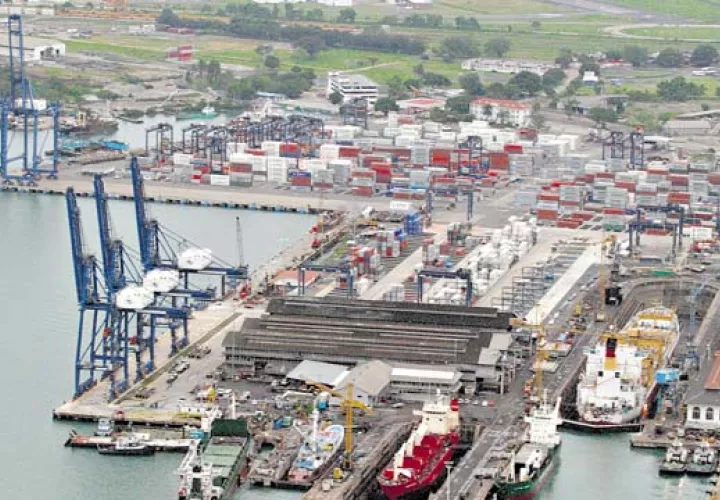
The movement of containers in the national port system continues to fall, in 13.5% until May, which indicates a difficult situation for the sector, even greater than the economic crisis that occurred in 2008-2009, when freight volume fell in 8.8% or 407 thousand 186 TEU (20-foot containers), according to experts.
The Office of the Comptroller General´s figures indicate that total freight handling in the port system fell to 19.1% in May compared with the same period in 2015. Bulk freight fell in 23.5%; the general freight, 20.8%, and the containerized one, 15.6%, while the movement of containers decreased in 13.5%.
According to records of the Maritime Authority of Panama (AMP), for May 2015, the movement of freight in the ports grew in 2.8% compared to same period in 2014, while this year, when compared to same period of 2015, it declined in 13.5%.
Should this situation in the movement of freight in the ports continue, it could bring as a consequence a negative affectation in the generation of employment in this sector, according to experts.
For the former President of the National Council of the Private Sector (Conep) Julio De la Lastra, this situation is rather global, since there is a low in the consumption of the West that impacts the production in Asia.
However, he noted that in a lower percentage a migration of freight to ports in Colombia was recorded due to very specific situations, which "in our view, may be overcome since the expanded Canal was inaugurated ".
"If freight drop percentages are maintained by the end of 2016, more than 700 thousand TEUS will be lost, representing more than 700 direct jobs", said the President of the Chamber of Shipping of Panama, Rommel Troetsch.
Mr. Troetsch stated that the port development that has taken place in the Pacific in recent years in Manzanillo and Lázaro Cárdenas in Mexico, as well as in Buenaventura in Colombia and Callao in Peru, has allowed shipping companies that do not make significant transshipment in Panama develop direct shuttle services to neopanamax ships of up to 13 thousand TEU in these ports and supply the Caribbean with direct services.
"These new direct services have taken away transshipment freight from Panama", he said.
Meanwhile, economist Juan Jované stressed that this situation means that Panama is in a very serious crisis would be "and it is not only what it can produce as a downturn in the case of the port system, but is has a multiplier effects because it may mean loss of employment and that person who loses a job will consume less and this effect affects the rest of the economy".
"It seems that the international platform of services of the country is in a critical situation and shows that the Government has failed to apply an appropriate policy on the sector to try to stem that decline," said economist Jované.
"When one says that total freight fell in 19.1%, that represents nearly one fifth, and when an activity loses one fifth, it is in a profound crisis", said the economist.