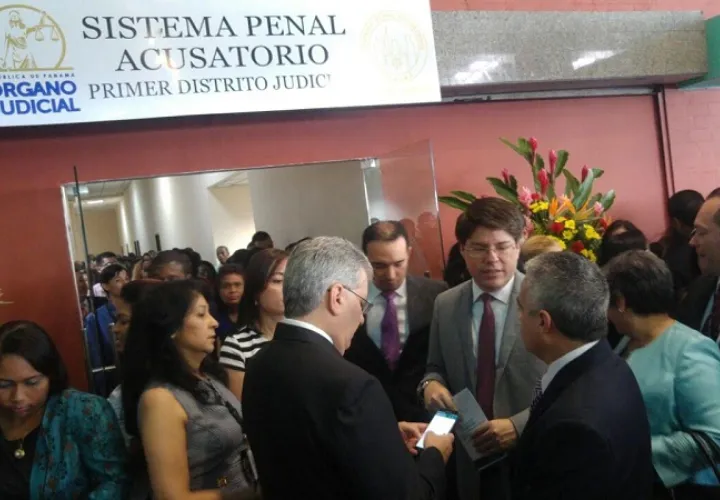
Two weeks into the implementation of the adversarial system of criminal justice (SPA), and in spite of the improvements this legal framework brings about, many of those employed in the justice system have expressed their malcontent.
Such is the level of dissatisfaction among civil servants that “mass resignations” are expected, according to a judicial source consulted by Panama America.
The reason behind the avalanche of resignations is the mounting work overload at those public prosecutor´'s offices that have been charged with dealing with cases under the old legal framework.
Lack of personnel, combined with the workforce requirements of the SPA, has resulted in a diminishing number of prosecutor's offices charged with this task. As if this was not enough, the workforce at such prosecutor’s office has also shrunk.
According to the source, “the SPA will need to be reformed, leading to a hybrid of the old and the new system”, so that cases still being investigated under the old system will be dealt with.
This raises serious issues, according to lawyer and former public ministry official Roniel Ortiz.
According to Mr. Ortiz, the situation can lead to en masse dismissal of cases being investigated under the mixed system in the First District of Panama.
This includes some 14,000 cases that were in process as of September 2 2016, when the SPA came into effect in this part of the country, which is where most legal cases are concentrated. The first District of Panama is made up of four provinces and three indigenous reservations.
According to the source, the majority of cases falling under the old system are paralyzed and many of them are close to prescribing. All this is due to lack of personnel.
“This is a serious situation, because unless cases are properly investigated and proof produced, they will be immediately dismissed as soon as they reached the courts", explained Mr. Ortiz. This may lead to mass impunity of the accused, leaving many victims of crimes without recourse to a legal defense.
A judicial source explained that the problem is most acutely felt at the public ministry, rather than the courts. This is because prosecutor's offices that were created to deal with those cases being investigated under the old system were abolished. This culling did not happen with the courts.
Such prosecutor's offices had been created to deal with the 14,000 cases still pending, 'only to be abolished by mistake', according to the source.
As an example of this, of the four municipal offices existing in Panama that were designated to deal with cases under the old system, only one was left in operation.
Each of these offices dealt individually with between 3000 and 5000 cases, all of which have now of fallen upon a single office. On top of that, the workforce at the remaining office was also reduced.
Mr. Ortiz, who as a litigation lawyer visits the offices of the public ministry on a daily basis, confirmed this situation.
“In some offices there are only four civil servants each dealing with hundreds of cases” he declared.