Food security, which is a right of each individual to have the necessary food products, concerns Panamanians in the absence of State policies that ensure this measure.
Experts indicate that in light of the precarious situation of the agricultural sector for the lack of a sustainable development plan, the nutrition of the Panamanian population could be at the expense of imports, which brings about expensive products as a consequence.
This is a factor that binds together with the lack of foods produced in the country, since high costs has caused that people are not well fed with necessary nutrients.
According to a study by the United Nations Organization for Food and Agriculture (FAO), one in five children in Panama under 5 years of age suffers from chronic malnutrition. This figure triples in indigenous populations.
Food security is a "human right" for all citizens, it is essential that Governments guarantee the production of good quality food", said expert in the agriculture matter, Úrsula Kiener.
She pointed out that, according to FAO, food security is understood as the capacity of the State to produce healthy foods that help the population to the achievement of its development.
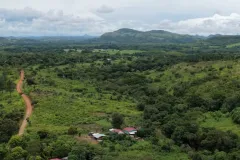
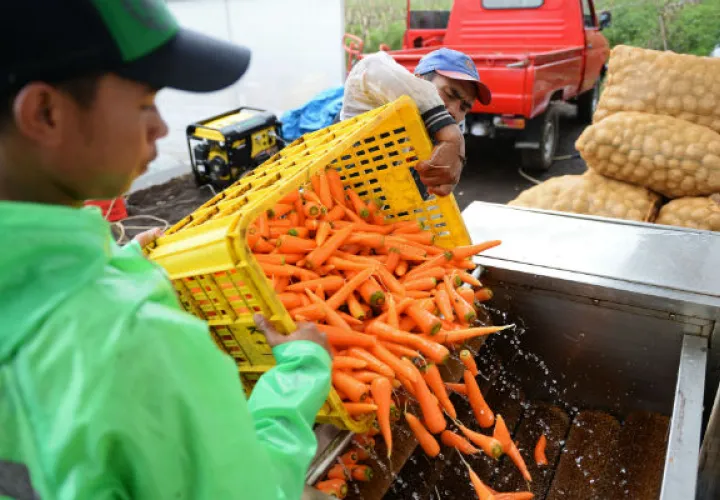
Production which in recent years has been quite affected, which is shown in the decrease of sown acres of the main foods that Panamanians consume.
The food product that has been affected the most is onion, which has declined from 2003 to 2016 in 74.1%, followed by rice (30.9%), corn (5.1%) and pigeon pea (2.3%).
Augusto Giménez, President of the Association of Producers of Highlands, said that Panama is an atypical country, where laws are entirely permissible, which benefits imports more than the planting of the main areas of consumption in the country.
Something which - according to him - you can notice in the decrease that they have suffered in areas such as onion, corn, rice, etc.
He added that in eight years, more than 35 thousand hectares are no longer being planted in the country, which in his view is "alarming".
He stressed that this has made the country to become practically dependent on imports, which is a very huge "risk" because others countries will always sell only when they have products and in the worst of cases, when they have "extra" products.
The Highland producer also expressed that this situation threatens the food security of Panamanians, who are eating imported poor-quality food product.
He added that given this situation, the local authorities should seek ways to create State policies designed to promote the agricultural sector, as well as provide them with better technologies so that in the future they can improve their production.
In the meantime, Maximino Díaz, producer, pointed out that - for example - in the specific case of rice from 2003 to date almost 40 thousand hectares are no longer being planted and this is due to the negligence of Governments in helping producers.
He stressed that corn, onion and other vegetables have met a similar fate since they that have lowered their production putting the supply of food for Panamanians in danger.
He added that the lands are there, but that producers are no longer encouraged to sow because they are in a permanent dilemma which is that any person may decide to import and flood the markets thus reducing the profits for them.
Situation which is shared by Guillermo Salazar, former Minister of Agricultural Development, who pointed out that this situation with imports has generated great distrust among banks, producers and the entire national productive system.
He stressed in order to prevent this from happening, the first thing to do is allocate sufficient resources to support the national farmer.
"Panama has a great potential to produce food, so we cannot continue in this process of contraction of our domestic production," he noted.
However, although the budget for 2017 is the most robust that has been planned for the country, investment in production still is not an important part on the Government agenda, as sectors such as the agricultural and the industrial actors have been pointing out.
And it is that the allocation of resources by sector shows that on the Government agenda the promotion of production is in the last place, according to the draft budget bill submitted by the Ministry of Economy and Finance (MEF) to the National Assembly.
The amount allocated to all sectors increased, the development of social services occupies the first place with an increase of 42%, followed by the sum allocated to financial services, which grew 17.2%, General Services (15.5%), infrastructure development (12.3%), other (10.7%) and the development and promotion of production ranked last with 2.3%.
Critical situation in the production sector
Agriculture, livestock and forestry grew 0.4% in 2014, in 2015 fell by 0.3% and this year the same decrease, 0.3%., is recorded during the first months.
Salazar indicates that the high import dependency has made the production of onion, beans, among other products in the market to be negatively affected, since producers do not feel confident, but insecure in connection with being able to sell what they produce.
This translates into high cost of products requiring the Panamanians to feed themselves, so that they endanger their own health by not eating properly.
"If proteins are expensive, then, families choose to replace it with starch, carbohydrates, and if so, they will not have the balanced diet, and if the income levels of the population are affected by the increase of prices, then, the purchasing power will not be the same thus affecting people’s nutrition", Salazar said.
Health experts are concerned about the overweight trend in the population as a direct result of this situation.
According to the World Health Organization, in the country three of every five adults is overweight and around three of every 10 are obese.


Ursula Kienner said that in Panama due to the fact that food of good quality is not being supplied, another problem arises, and it is that obesity and diabetes indexes have tripled.
Experts say that in order to get lower prices and that the population may access to healthy products, there has to be a production security plan.
Contenido patrocinado




Últimas noticias