The crisis due to the lack of medications and basic medical supplies in the public health systems is being used by the Government to strengthen its policy of outsourcing of services and direct purchase in favor of companies of relatives.
This was denounced by the National Medical Negotiating Commission (Comenenal), that turned on the lights of alert before the possibility posed by authorities of health that seek to create an alternating dependency, with the excuse of streamlining the purchasing processes.
It was Jenny Vergara, Director of Pharmacy and Drugs of the Ministry of Health (Minsa), who raised the possibility of creating this "autonomous acquisition of medicines and supplies authority".
Vergara hurried ahead in anticipation of criticism and said that the Government would already have the support of the Pan American Organization of Health (PAHO) for this initiative.
But an official statement by the Comenenal warns that creating another "authority" of the Minsa only decreases over the empowerment of this entity.
In favor of donors
The medical members denounced that the government´s target is to open the doors so that "the decisions are based not addressing the national interests, but defending the interests of a few privileged ones close to the government, and, most surely, donors of their electoral campaigns ".
The Comenenal showed an emphatic opposition to this possibility.
They also denounced the Government of President Juan Carlos Varela, to which they point for having "intentions to implement the neoliberal booklet of privatizations in Panama".
According to the former director of the Social Security Fund (CSS) Juan Jované, this Government is repeating the strategy of sending an official to talk about "the possibility" of implementing something, "when what he actually is doing is testing the ground to see if there is opposition shown by the population".
Jované coincided with the Comenenal on the approach that "a dependency which breaches the laws and national regulations", is harmful to the popular interests.
Business Relatives
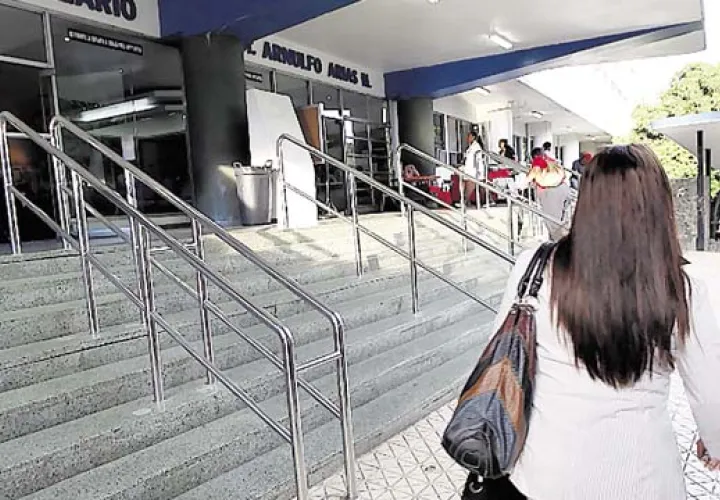
Something similar just happened with the latest crisis of medicines in the Hospital Santo Tomás (HST), commonly called "the people´s hospital ".
After the threat of strike launched last week by doctors and specialists in this hospital, the Government announced the "exceptional measure" of purchasing $5 million in drugs.
However, a statement by the Presidency failed to reveal the list of companies that will benefit, "nor did it reveal that they will be paying 30% more since it is a direct purchase and not a purchase through a public tender", explained the oncologist and political leader, Fernando Cebamanos.
"This is to help private companies to benefit," said this oncologist with over 40 years of experience in care and health management.
"The policy that Varela plays is the road to provide a very poor health very to the low-income people, and promote the privatization of the services of health through the private insurance ", reiterated Cebamanos.
According to Fernando Cebamanos, in Varela´s management what has been seen is an "abandonment of public health institutions," something he called "a perverse policy".
He argued that the privatization of the services of health will not favor the average Panamanian, "because in the end it produces a poor health for the poorer;" "and pushes to the middle class to the consumption of private health attention".
In this regard, he said that "some significant reforms in the CSS will come in terms of pensions, but also in health care".
Outsourcing
Fernando Cebamanos reinforced his argument, pointing to several services that have been outsourced in the CSS, among them that of hemodialysis.
This is so, even though the Law 51, in full rigor, establishes that it is not possible to privatize a service for a long time, and that the Government must do everything so that health services are provided by the State.
"However, we are already going in the second period of renewal of contract for the service of hemodialysis... that is outsourcing with overtones of privatization", insisted Cebamanos.
CSS has also outsourced the anesthesia service. And more recently, the CSS has started hiring for private ambulance services.
An initiative that has been presented and defended in a repeated fashion by the director of the institution himself, Estivenson Giron, despite receiving criticism by the Comptroller of the Republic himself, Federico Humbert.

For this new outsourcing, the management of Estivenson Giron has given his whole biased support to the Spanish Consortium Ambueberica, awarding it the contract for the rental of 97 ambulances for an amount of $21.6 million.
In fact, he has given the firm a prequalification of 100%. But now the company that was in the second place (Consorcio Asociación Accidental Ambulancia para Todos) has revealed some papers that show that the Spanish Consortium breached fundamental requirements of the statement of objections.
According to the Comenenal, all this "endorses the neoliberal formulas that finally serve as legal instruments to sustain corruption".