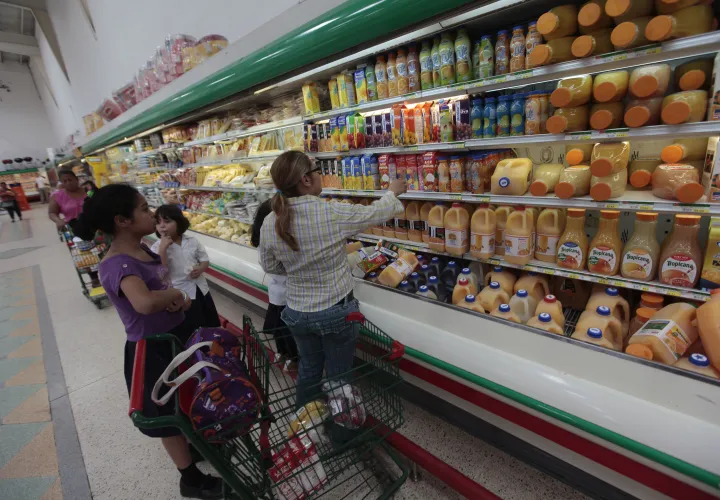
Far from the reality experienced by Panamanian daily when buy food, the Ministry of Economy and Finance (MEF) ensures that the cost of the basic family food basket has increased only $4.19 over the last year.
In its latest report on the cost of the basic family food basket in the districts of Panama and San Miguelito its cost was $303.50 in December 2015, while in January the same year, the cost was $299.31.
Increased cost of the 26 food, according to the latest report, totaled $0.90.
The main increases were in the Yam $0.10 $ 0.11 mayonnaise, ham 26.0%, pineapple $ 0.10 to $ 0.08 per kilogram garlic. These five foods accounted for 61.9% of this increase.
The main increase was observed in the meat group, for example, before a Panamanian was spent $ 67.96 in meat and now spends about $ 92.36, ie, about $ 24.40 more, according to the MEF.
Given this, Pedro Acosta, president of the Union of Consumers and Users of the Republic of Panama, he asks: what part of the country these surveys are done ?, so he recommended them to go to the streets and ask the consumer common to realize that reality is different from what they raised in their reports.
According to Acosta, most foodstuffs have increased cost.
He recalled that the restaurants and inns have increased their costs because they have also been affected by high food prices have on the domestic market.
To this is added that the decline in oil prices has not affected the price of food down.
Economist Juan Jované attributes the rise in food prices to the extent of price controls, an initiative of the current government that promised savings of $ 58 for the pockets of consumers, who so far have not benefited.
Since the implementation of price controls have been several sectors have asked the government to eliminate the measure on the grounds that all he has done is to urge the other products that are not regulated, as well as following the speculation.
The Chamber of Commerce, Industries and Agriculture of Panama (CCIAP) requesting the removal of regulation that ensures that does not solve national problems.
Employers indicated that contrary to campaign promises, "promised price controls would not affect the consumer and the producer, but is impacting all sectors, especially agriculture."
Medida
- La medida del control de precios entró en vigencia el 7 de julio de 2014 por seis meses, mediante el
- Decreto N.°165, y desde entonces se ha seguido extendiendo cada seis meses.
- Actualmente, hay 22 productos de la canasta básica regulados y 28 que cuentan con una libertad
- vigilada por parte de la Autoridad de Protección del Consumidor y Defensa de la Competencia (Acodeco).
- En la última extensión del Control de Precios, el Gobierno anunció que incrementaría el costo del ñame y las lentejas, ya que el presidente de la República, Juan
- Carlos Varela, considera que "hay cambios en el precio del mercado y tenemos que ser justos también con los comerciantes, de que si el mercado aumenta, entonces, tenemos que mover esos dos productos un poco".