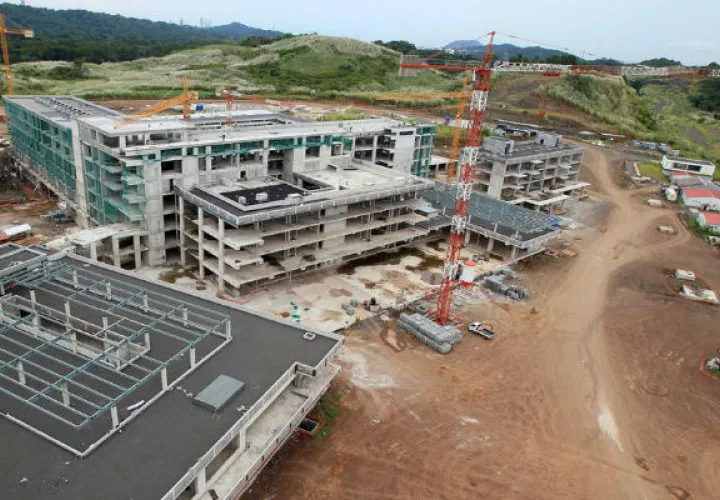
One of the first decisions taken by President Juan Carlos Varela upon taking power was to paralyze all the major works that had been undertaken by the administration of Ricardo Martinelli. In the majority of cases, such decision was devoid of any real justification.
Indeed, President Varela ordered a systematic, blanket audit of all projects in complete disregard of the economic consequences this may have on the country and its population.
Among such public works, whose aggregate value rounds into the tens of millions of dollars, are hospitals, a new convention centre, at least two sporting complexes, as well as the country’s first refrigerated supply chain system.
According to multiple legal sources, current administration officials will have to be held accountable for the financial losses caused by the unjustified termination of such projects, all of which have been financed with public money. Some argue that such losses are legally tantamount to misappropriation of public funds.

Since his initial ill-advised move, President Varela has in fact been obliged to make a number of U turns and re-initiate some of the suspended projects. Regrettably, though, the losses incurred as a result of the temporary suspensions of works, borne by the state as well as by private companies, cannot be undone. One glaring example is that of the Medical City Complex in Panama City.
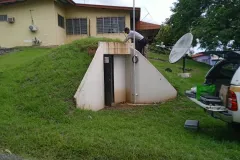
Nevertheless, the future of one of the major products initiated by Martinelli - that of a nationwide refrigerated supply chain system - remains uncertain. In spite of the fact that some key components had almost reached completion by the time of the government hand over in mid-2014, entire structures have since fallen into disrepair. Such is the case for the Food Unit in Panama City, whose industrial refrigeration systems have been rotting away for almost two years.
The list of public works fighting decay because of lack of maintenance is regrettably long. All signs point to the fact that it is likely to get longer still.