ID DOC: 79932
FECHA: 9/27/2006
ORIGEN: PANAMA
FUENTE: Embassy Bogota
PRIVACIDAD: CONFIDENTIAL
REFERENCIAS:
VZCZCXRO1532
PP RUEHAO RUEHCD RUEHGA RUEHGD RUEHHA RUEHHO RUEHMC RUEHNG RUEHNL
RUEHQU RUEHRD RUEHRG RUEHRS RUEHTM RUEHVC
DE RUEHBO #1407/01 0601141
ZNY CCCCC ZZH
P 011141Z MAR 07
FM AMEMBASSY BOGOTA
TO RUEHC/SECSTATE WASHDC PRIORITY 3043
INFO RUEHWH/WESTERN HEMISPHERIC AFFAIRS DIPL POSTS PRIORITY
C O N F I D E N T I A L SECTION 01 OF 02 BOGOTA 001407
SIPDIS
SIPDIS
E.O. 12958: DECL: 02/08/2017
TAGS: ASEC, ECIN, ECON, PGOV, PREL, PTER, SNAR, CO, PA, VENZ
SUBJECT: COLOMBIA AND PANAMA: DIFFERING PERSPECTIVES ON
SENSITIVE BORDER ISSUES
REF: PANAMA 00147
Classified By: Political Counselor John S. Creamer - Reason: 1.4 (b,d)
-------
SUMMARY
-------
1. (C) Tensions increased between Colombia and Panama after
President Uribe announced he would place greater customs
restrictions on goods originating from Panama's Colon Free
Trade Zone. Panama claims these restrictions would violate a
customs agreement signed by the two countries in October
2006, and may take the dispute to the WTO. A Panamanian
Embassy official said Uribe was playing political hardball
over Panama's refusal to agree to an expansion of the
Pan-American Highway through the Darien Gap in Panama. A
Colombian Foreign Ministry official said the two issues were
separate. Uribe announced the restrictions under growing
pressure from the Colombian business community. The GoC said
there had been no recent military action along the border
along the Panamanian border. The Panamanian Embassy denied
reports Panama would require visas for Colombians. End
Summary.
---------------------------------------------
PANAMA OPPOSES HIGHWAY OVER SECURITY CONCERNS
---------------------------------------------
2. (C) Panamanian First Secretary Juan McKay said President
Alvaro Uribe cornered Panamanian President Martin Torrijos in
Ecuador during President Correa's inauguration on January 15,
to press for the expansion of the Pan-American Highway
through the Darien gap between Panama and Colombia. McKay
said most Panamanians were opposed to the expansion fearing
it would facilitate FARC operations in Panama, as well as
illegal entry by Ecuadorians en route to the United States.
He said a rise in kidnappings in Panama, primarily Colombian
on Colombian, prompted Panamanian fears. McKay also claimed
that Uribe was pushing the highway expansion for personal
reasons, since the road would originate in Uribe's hometown
of Medellin.
--------------------------------------------- --
COLOMBIA SAYS HIGHWAY MAKES GOOD BUSINESS SENSE
--------------------------------------------- --
3. (C) Colombian Ministry of Foreign Affair's Latin American
desk officer Antonio Dimate said the GoC wanted to facilitate
commerce and to provide infrastructure for the energy
integration initiatives under Plan Pueblo Panama. He said
the highway would make it easier to control access to and
better monitor the remote border region, ensuring greater
security for Panama. He added it did not make sense that
there was no way to travel by road from Panama to Colombia.
DiMate also said that any disagreements over the highway were
purely technical and would be addressed at the working level;
the two sides had been able to address most environmental
concerns in a recently established working group.
--------------------------------------------- ---------
PANAMA SEES TRADE RESTRICTIONS AS PRESSURE FOR HIGHWAY
--------------------------------------------- ---------
5. (C) McKay claimed Uribe had threatened greater customs
restrictions on goods originating in the Colon Free Zone to
pressure Panama to agree to the highway expansion. Uribe
announced the restrictions at the end of January 2007,
claiming lack of progress on contraband controls. McKay said
these moves violated the cooperative customs agreement signed
by the two countries in October. He said the political
motivation behind Uribe's action was clear. Otherwise, Uribe
would have waited until the end of the three month review
period (February 6) to announce the restrictions. McKay
claimed Panama was doing all it could to comply with
Colombia's inquiries into Colon businesses, but progress was
limited by a lack of resources.
----------------------------------
COLOMBIA SAYS ISSUES ARE UNRELATED
----------------------------------
6. (C) DiMate said the highway debate and customs agreement
were unrelated. Colombia was unhappy with the large volume
of contraband originating in the Colon Free Trade Zone, and
had not linked the customs agreement to the highway. Under
the customs agreement, Panama had agreed to prevent merchants
from illegally selling large volumes of shoes and textiles in
Colombia for below-market prices--part of the black market
peso exchange. Panama had not complied with its obligations,
however, and the Colombian business community was unhappy.
The GoC was also tired of dumping that benefited
narcotraffickers and armed groups. Members of the Colombian
Congress were also concerned that endemic corruption in
Colon--and in Panamanian Customs Director Daniel Delgado
Diamante's organization--would prevent Panama from ever
implementing the agreement in an effective manner.
BOGOTA 00001407 002 OF 002
---------------------------------------------
RUMORS OF COLOMBIAN TROOP MOVEMENTS AND VISAS
---------------------------------------------
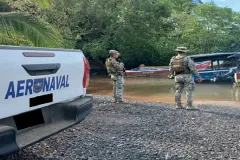
4. (C) Mckay said he had no knowledge of recent reports in
Panama of Colombian troop movements on the Panama-Colombia
border, other than widely publicized joint
Panamanian/Colombian exercises conducted with US military
forces (reftel). Colombian military sources told us no
military actions have taken place within the last month near
the border, and that activity in Choco was taking place far
south of the border. The Colombian Army's 17th Brigade,
whose area of responsibility includes much of the border
region, told us they regularly coordinate with their
Panamanian counterparts. On a separate issue, McKay said the
Panamanian business community was opposed to the idea of
requiring Colombians to obtain Panamanian visas. It would
not happen, he said.
DRUCKER